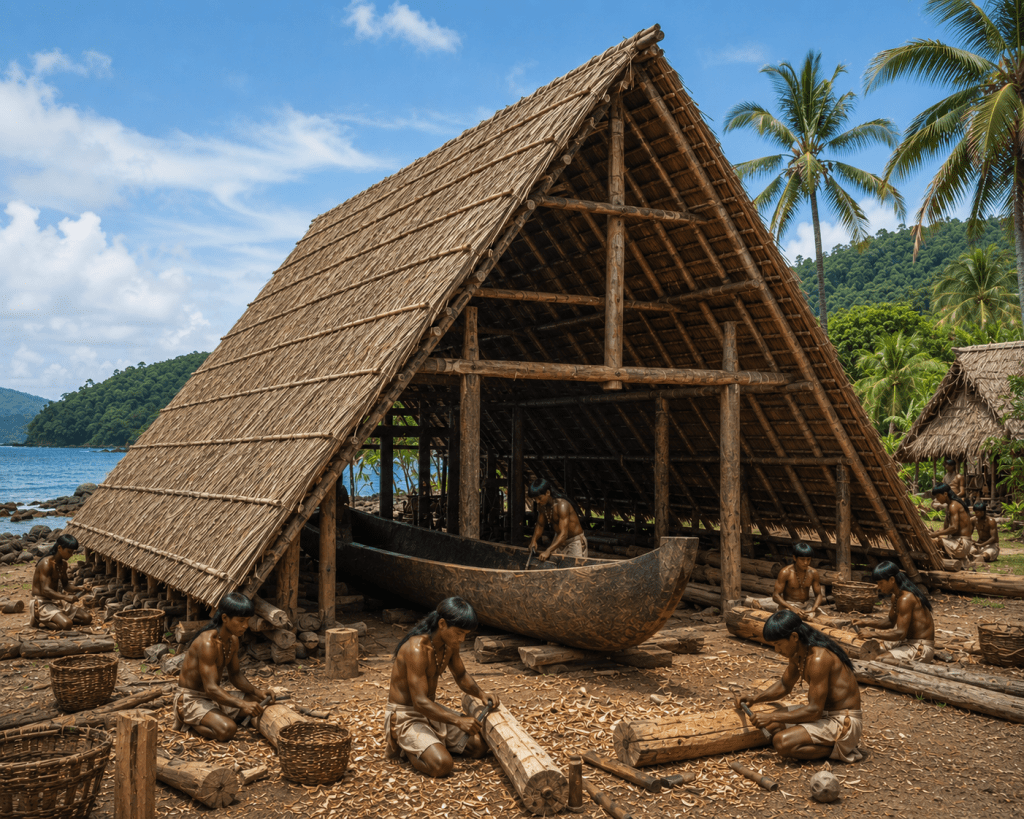
The exploration of Indigenous Caribbean canoe infrastructure reveals significant insights into the social dynamics and cultural traditions of these maritime communities. When we consider canoes not merely as vehicles for transport but as influential forces in the organization of society, we gain a deeper understanding of their vital role in shaping communal life. Canoes impacted beliefs about the cosmos, defined roles, supported military activities, and necessitated substantial communal labor, emphasizing their crucial contribution to these cultures.
For Indigenous Caribbean societies centered around maritime activities, canoes acted as fundamental pillars of community organization. Their building and utilization frequently called for cooperation between kin and non-kin groups, similar to the collaborative efforts observed in monumental construction projects, which required months of coordinated labor.Simply labeling these groups as “maritime societies” overlooks the extensive labor, resource management, and ecological knowledge that were essential for canoe construction. A more fitting description would be “canoe societies,” which recognizes the essential role these vessels played in shaping their identities and lifestyles.
The role of watercraft in shaping social identity is evident through various contemporary observations and archaeological discoveries. For instance, the Warrau (or Warao) people of the Orinoco Delta in Venezuela and Guyana utilized their canoes not just for practical purposes but as integral components of their cultural expressions (Holtzman, 2023). Indigenous Caribbean Canoes symbolize unity and identity within the community, with their ownership entwined with concepts of power and prestige. Historical records from the Greater Antilles indicate a strong connection between canoe ownership and political stature. Christopher Columbus remarked that the Caciques (chiefs) in Jamaica possessed large canoes, which served as emblems of their authority and status. These watercraft were more than mere transport; they held political significance, marking their owners’ place within the social hierarchy.
Canoe construction and launching often involved communal rituals that reinforced social unity and group identity. Canoe houses were spaces designated for the exchange of specialized knowledge regarding canoe crafting and navigation. The role of “captainship”—the control over timing and launching—was linked to political influence and command over collective labor. Moreover, the materials and methods used in building canoes often had spiritual implications. In Caribbean cultures, certain trees, like Ceiba pentandra, are believed to harbor spirits, and their utilization was subject to specific taboos; however, from March to May, when the tree sheds its leaves, it is thought that the spirits are absent, making it safe to fell during this period. The timing of the felling of these trees was often coordinated with lunar cycles, reflecting deep-rooted cosmological connections. This lunar association with canoeing is also evident in Circum-Caribbean myths, which suggest that celestial bodies like the sun and moon travel across the sky in canoes (Lévi-Strauss, 1990).
Seasonal variations and their interaction with canoe usage greatly affected social interactions. The winter dry season was viewed as the best time for fishing and canoe voyages, promoting greater community participation in these activities. The ecological variations among Caribbean islands influenced the processes involved in canoe manufacturing. The need to obtain suitable materials sometimes prompted communities to travel considerable distances. Early colonial reports noted that the Indigenous Taíno and Kalinago populations regularly sailed from smaller, arid islands (like St. Croix) to mountainous, wetter regions (like Puerto Rico and Dominica) to harvest massive, towering trees for their dugout canoes (Oxford 2025). Conversely, the arrival of the spring rainy season shifted priorities toward agricultural pursuits, reflecting traditional life cycles and showcasing how a well-coordinated canoe system facilitated inter-island connections and social interactions. Additionally, communal gatherings, often associated with canoe launches, underscored the collective nature of these efforts; neighbors would come together to celebrate their shared labor—a practice noted as far back as the 17th century by observers like Du Tertre (1667) and Breton (1665). These festivities strengthened social bonds and reinforced cultural norms through shared experiences and collaborative endeavors.
Exploring canoe infrastructure reveals the intricate relationships, cultural traditions, and ecological practices present in maritime communities. By viewing canoes not just as means of transport, but as significant cultural products, we can better understand how our ancestral societies structured themselves, upheld their identities, and interacted with their environment. Canoes were crucial to the daily lives of their communities, reflecting the deep connections between work, spirituality, and social organization. This perspective highlights the necessity of delving beneath the surface to uncover the profound social significance embedded in everyday items like canoes.

